
Every summer, the same question seems to surface around the Iowa Great Lakes:
“Since the lakes are public, does that mean anyone can use a private dock?”
It’s a common misconception, and one that’s often debated online. While the lakes themselves are public waters, that doesn’t automatically make every dock open for public use. Iowa law actually draws a very clear distinction between public waters and privately permitted docks.
Whether you’re a lakeshore homeowner, a visitor enjoying the lakes, or someone considering purchasing waterfront property, understanding these rules can help clear up the confusion.
The Lakes Are Public Waters
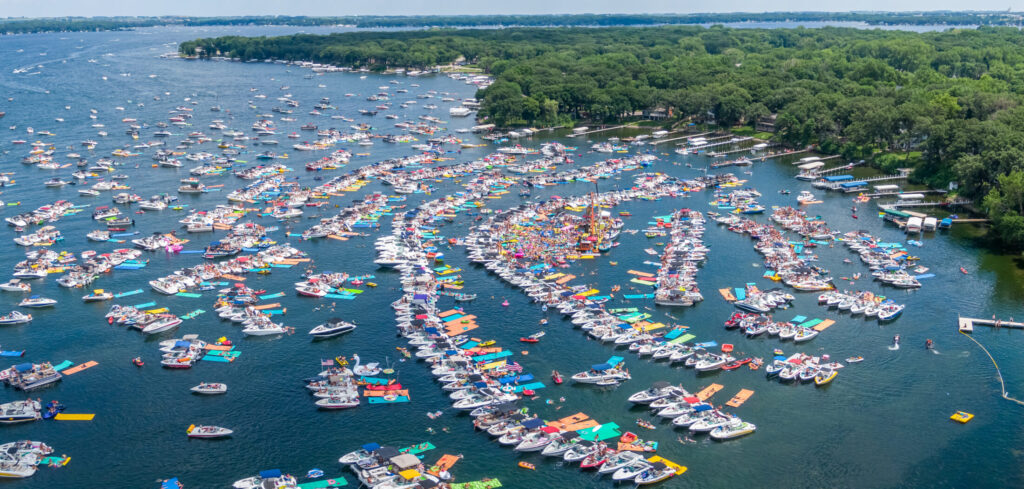
The Iowa Great Lakes—including West Lake Okoboji, East Lake Okoboji, Spirit Lake, and the surrounding natural lakes—are public waters managed by the Iowa Department of Natural Resources (DNR). The lakebed beneath these waters is owned by the State of Iowa, allowing everyone to enjoy activities like boating, fishing, swimming, and other forms of recreation.
Because these are public natural lakes, the Iowa DNR regulates structures placed in or over the water. Any dock, hoist, buoy, raft, or similar structure must receive the appropriate permit before it can be installed.
This is where much of the confusion begins. Many people assume that because the water is public, the docks built over that water must also be public. However, that’s not how Iowa law works.
Are Private Docks Public?
The simple answer is no.
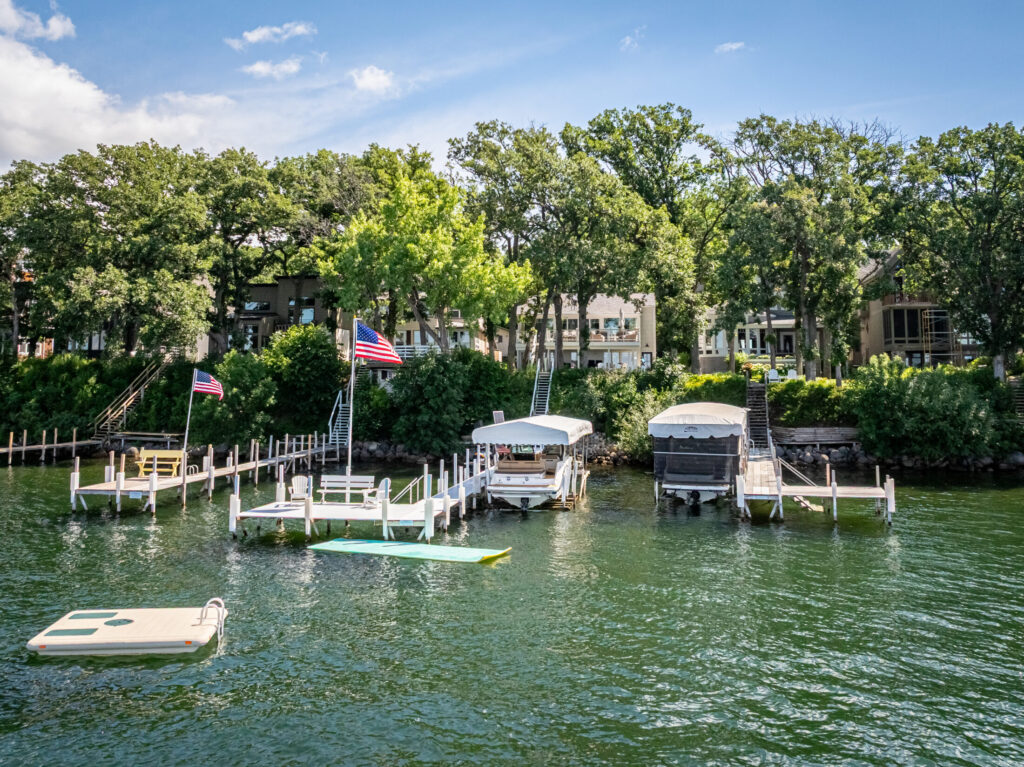
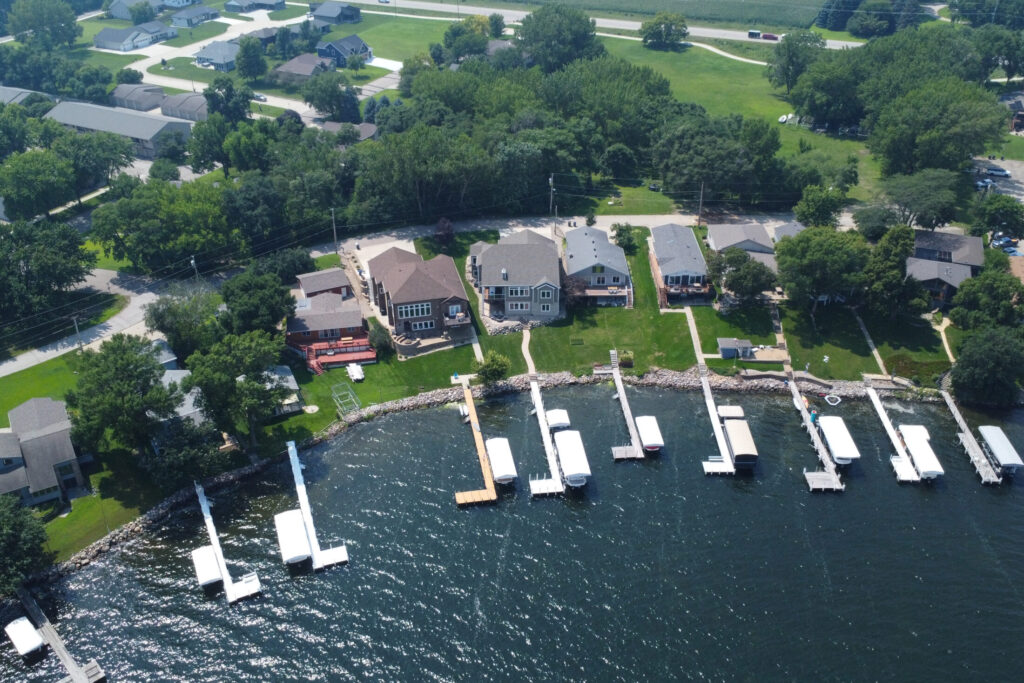
A lawfully permitted private dock remains the property of the individual or entity that holds the permit. Although the dock extends over public water, it is considered private property and is reserved for the use of the permit holder and their invited guests.
This means members of the public cannot:
- Tie their boat to someone else’s private dock without permission.
- Use a private dock for swimming or sunbathing.
- Fish from a private residential dock without the owner’s permission.
- Occupy a private dock simply because it’s located on public water.
In other words, public ownership of the lake does not give the public unrestricted access to privately permitted docks.
What Rights Does the Public Have?
While private docks are not open for public use, Iowa law does protect the public’s ability to travel along the shoreline.
If someone is legally walking or wading parallel to the shore and a dock blocks their path, they may step onto or over the dock if necessary to continue traveling along the shoreline. This is considered a rite of passage—not a right to use or occupy the dock.
This distinction is important.
Stepping over a dock to continue walking along the shoreline is very different from stopping to fish, swim, tie up a boat, or spend time on that dock. The dock itself remains reserved for the permit holder and their guests.
Similarly, dock owners cannot block people from using the public water surrounding their dock. The water remains open for boating, fishing, paddling, and other lawful recreational activities.
Understanding the Difference Between Private and Public Docks
Another source of confusion is the difference between private residential docks and public access docks.
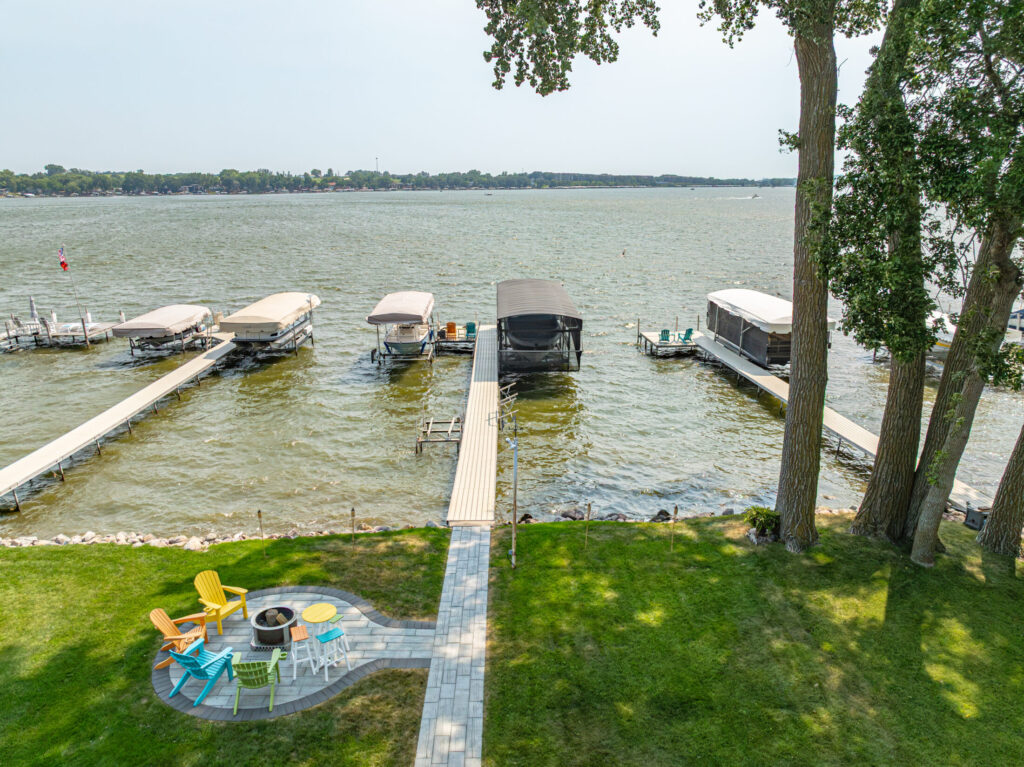
Private residential docks are installed under permits issued by the Iowa DNR and serve individual lakeshore properties. These docks belong to the permit holder and are intended for private use.
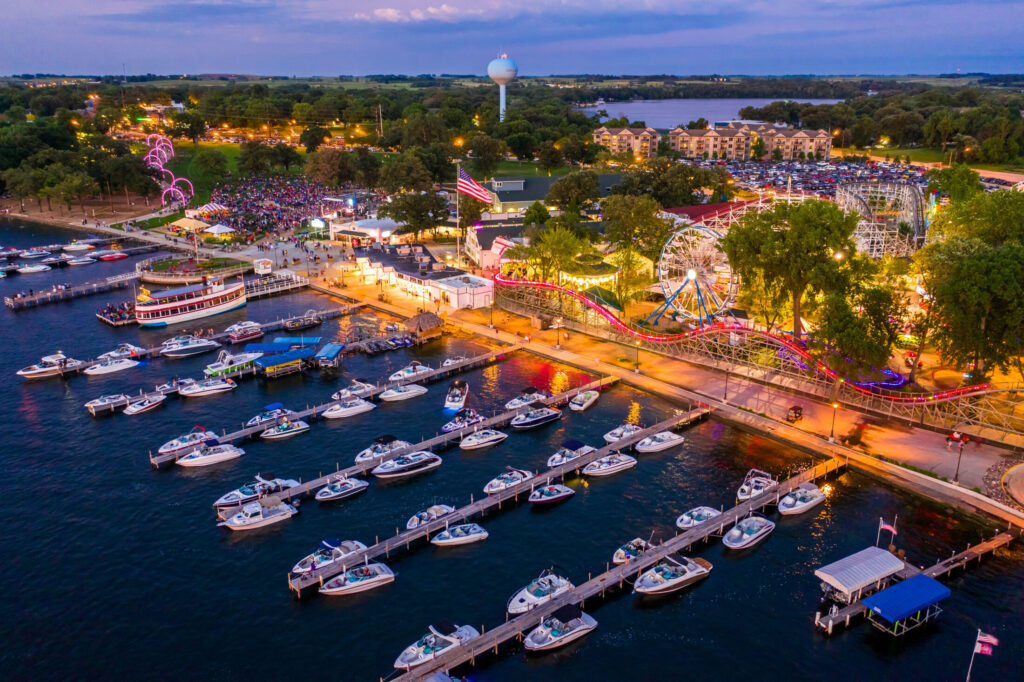
Public access docks, on the other hand, are located at designated public access areas owned or managed by a city, county, or the State of Iowa. These docks are specifically intended to provide public access to the lake and are often clearly identified as public docks.
For example, the City of West Okoboji and other communities around the Iowa Great Lakes have ordinances governing public access docks located at city rights-of-way. While boat hoists at these locations may be assigned to permit holders, the public generally retains the right to use the dock itself as long as that use doesn’t interfere with the permit holder’s authorized use.
Because these docks serve different purposes, it’s important not to confuse a neighborhood public access dock with a privately permitted residential dock.
Iowa DNR Dock Regulations
To help protect the lakes, neighboring property owners, and public recreation, the Iowa DNR has established several rules governing docks throughout the state.
Some of the most notable requirements include:
- Every dock must have the appropriate DNR permit before installation.
- Each dock must display the property’s 911 address, city, and permit number at the water end of the dock where it is clearly visible.
- Docks and hoists must generally remain at least five feet from adjoining property lines.
- A minimum ten-foot gap must be maintained between neighboring docks, hoists, or moored boats.
- Docks should extend only as far as reasonably necessary to provide water access while minimizing impacts on navigation, neighboring properties, and the aquatic environment.
These regulations help balance private waterfront access with the public’s ability to safely enjoy Iowa’s lakes.
Why These Rules Matter
The Iowa Great Lakes are one of Iowa’s greatest natural resources, attracting thousands of residents and visitors each year. Respecting both public rights and private property helps everyone enjoy the lakes while reducing unnecessary conflicts.
Understanding that the water is public but private docks remain privately owned is one of the easiest ways to avoid misunderstandings.
The Bottom Line
Here’s a quick summary:
- The Iowa Great Lakes are public waters managed by the Iowa DNR.
- The public may boat, fish, swim, and recreate on these waters.
- Lawfully permitted private docks remain the private property of the permit holder.
- Members of the public may not use a private dock for recreation, fishing, or docking their boat without permission.
- If a dock blocks travel along the shoreline, the public may step onto or over the dock only as necessary to continue walking or wading parallel to the shore.
- Public access docks are different from private residential docks and are specifically designated for public use.
Whether you’re spending the weekend on the lake or considering purchasing lakeshore property, understanding these distinctions helps preserve the rights of both property owners and the public while keeping the Iowa Great Lakes enjoyable for everyone. Feel free to contact the team at Okoboji Realty if you have any questions regarding your property’s dock and shoreline!
This article is intended for informational purposes only and is based on Iowa Department of Natural Resources regulations and applicable local ordinances. Regulations may change over time, so property owners and lake users should consult the Iowa DNR or their local municipality for the most current requirements.
Sources: